
A Sunday in October ’25
Two Drawings by Philip Hughes
F. Heffer
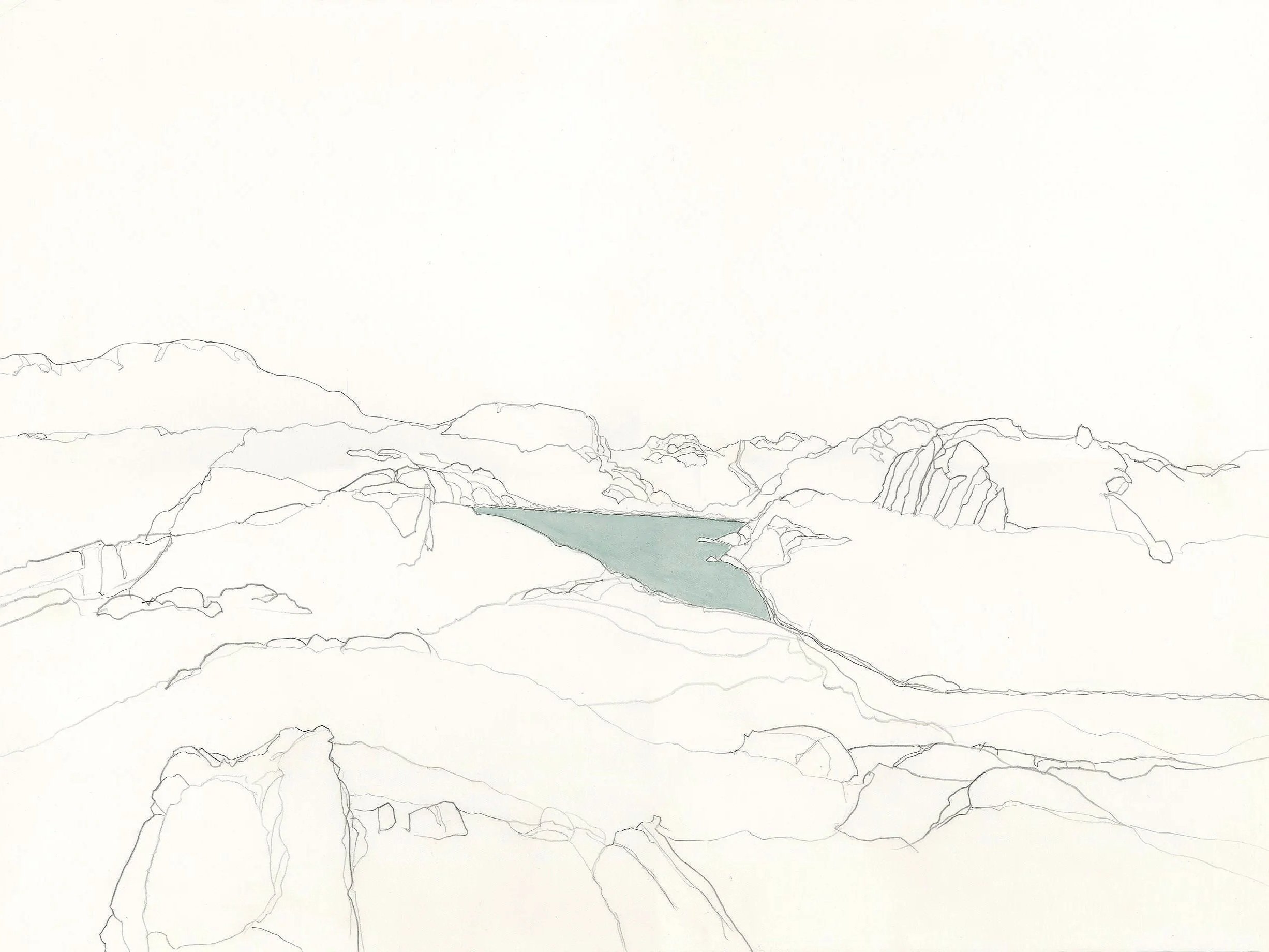
Lochan, close to Reef, Lewis, 12.10.25, 11:00am, pencil on paper, acrylic
Here, Hughes has drawn a web of rock, in whose craggy hands is held a lochan.
Isolated from this pencilled web, the body of water is a mere patch of chalky blue acrylic. In
context, it extends downwards, and we look for the streams that run into it and those that exit
it, tracing the routes of least resistance into the land from the water.
The lochan is wet, dull and opaque, it’s great weight strung up by the taught lines that
proliferate from it. Each pencil line seems to explain the lochan’s formation. Why it has
formed where it has, in this particular depression on the Isle of Lewis.
Hughes is concerned with how land is assembled. How different elements of the land (rock,
heather and water) work together. In this drawing, the lochan explains the line and the line
explains the lochan.
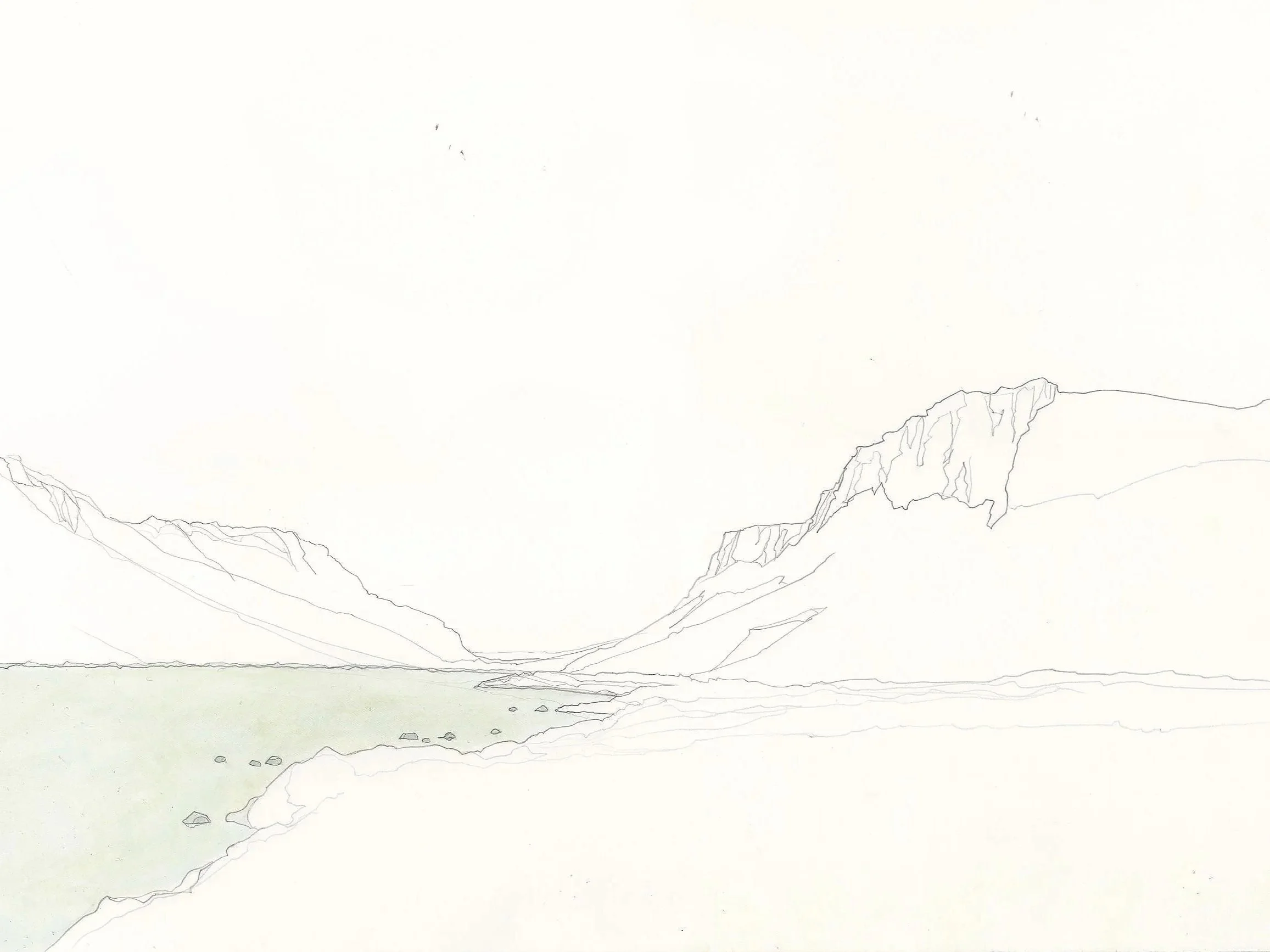
Loch Sgailler, Lewis, 12.10.25, 13:00pm, pencil on paper, acrylic
This drawing was undertaken after the one above. The two lochs are different
colours. Perhaps the sky has changed in the intervening hours.
In this drawing, it is pleasant that you can see the land extending into the loch, the submerged
stone visible.
The pencil line that traces the ridge in the right-hand side of the drawing, ends in a loose
square. The viewer is reminder quite how abruptly a ridgeline can turn into a graphite mark.
For a drawing of comparatively few lines, the grandeur of the view is impressed upon one. It
is clear from the drawing, that this grandeur has not been arranged by the artist to form a
pleasing composition. This does not interest Hughes. Rather, he seeks to pinpoint his
perspective, rooting his vision to a particular place, and it is through this specificity of
perspective, that the view is lent grandeur