
The Spaces In Between
So-called ‘negative space’ in drawing, painting and sculpture
F. Heffer
The quince is a good looking fruit, and if one were to set about painting several of them on a table or a plate, one might be tempted to start with the fruit themselves. Tackling their waxy, tremulous flesh, their colour or silhouette.
The painter Francis Hamel advises against this in a 2015 YouTube tutorial. Instead, he starts with the ‘negative shapes,’ saying: ‘I’m going to start by painting the space between the fruits. Still life is about the relationship between objects… and I’m going to largely ignore the fruit at the beginning.’
Hamel’s advice is backed up up by his deft work in the video. With a large brush and loose technique, the much-diluted paint begins to fill in the gaps between the quinces. By leaving them out, they become visible. While painting, he mentions a life drawing practice that asks the student to draw all that can be seen apart from the model.
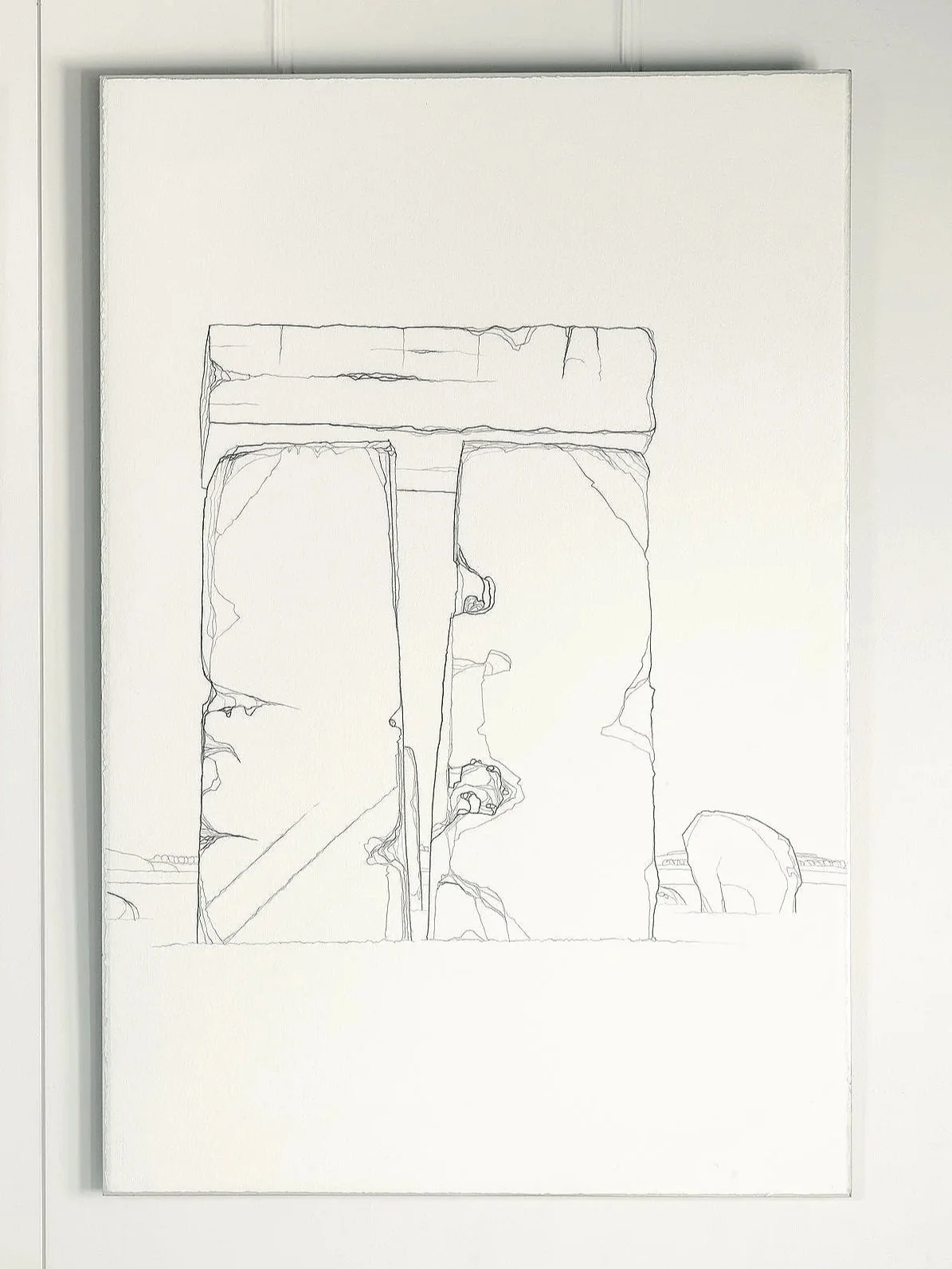
When I watched this video, I thought about the current exhibition at BRINK and about two drawings of Stonehenge in particular. In these drawings, the space between the three stones (a trilithon) is significant. These drawings are of course line drawings, and the technique is different from Hamel’s painting that seeks to fill in with colour in order to bring out the subject, yet both works make important the space in between the subject.
In Hughes’ drawings, the paper that shows the outer sky and the paper that shows the wedge between the stones is untouched. No paint has been applied, and no pencil line has strayed there. The surfaces in isolation are indistinguishable.
In the wider context of the drawing however, this does not seem to be the case- the drawing convinces us otherwise. The space between the three stones is charged with tension whilst that without blithely goes about it’s day. It is testament to Hughes’ drawing, and their ability to summon the presence of these stones, that these blank areas contain within them such different forces.
Many sculptors have made so called ‘negative space’ their subject. One thinks of Rachel Whiteread or Steve Dilworth or Eduardo Chillida’s work below, ‘Lo profundo es el aire,’ (1996)- a carved block of alabaster in the Guggenheim, Bilboa. In English this means, ‘How profound is the air,’ and though this is not poetically interesting, the line provides a good starting point for looking and thinking about the work, or, rather the absence created by such a work. Dilworth’s ‘Mountain Air,’ (2001) also comes to mind. This large bronze sculpture contains a phial of mountain air which Dilworth collected at the top of a mountain on the dawn of Midsummer. Encased by such a weight of bronze and held, sealed, in glass, the air becomes the subject. In two dimensions, this is the case with Hamel’s quinces and Hughes’ stones; what lies between them is often as important as the things themselves.
Stonehenge: inner face of Stones 53, 54 & 154, 1998, Philip Hughes

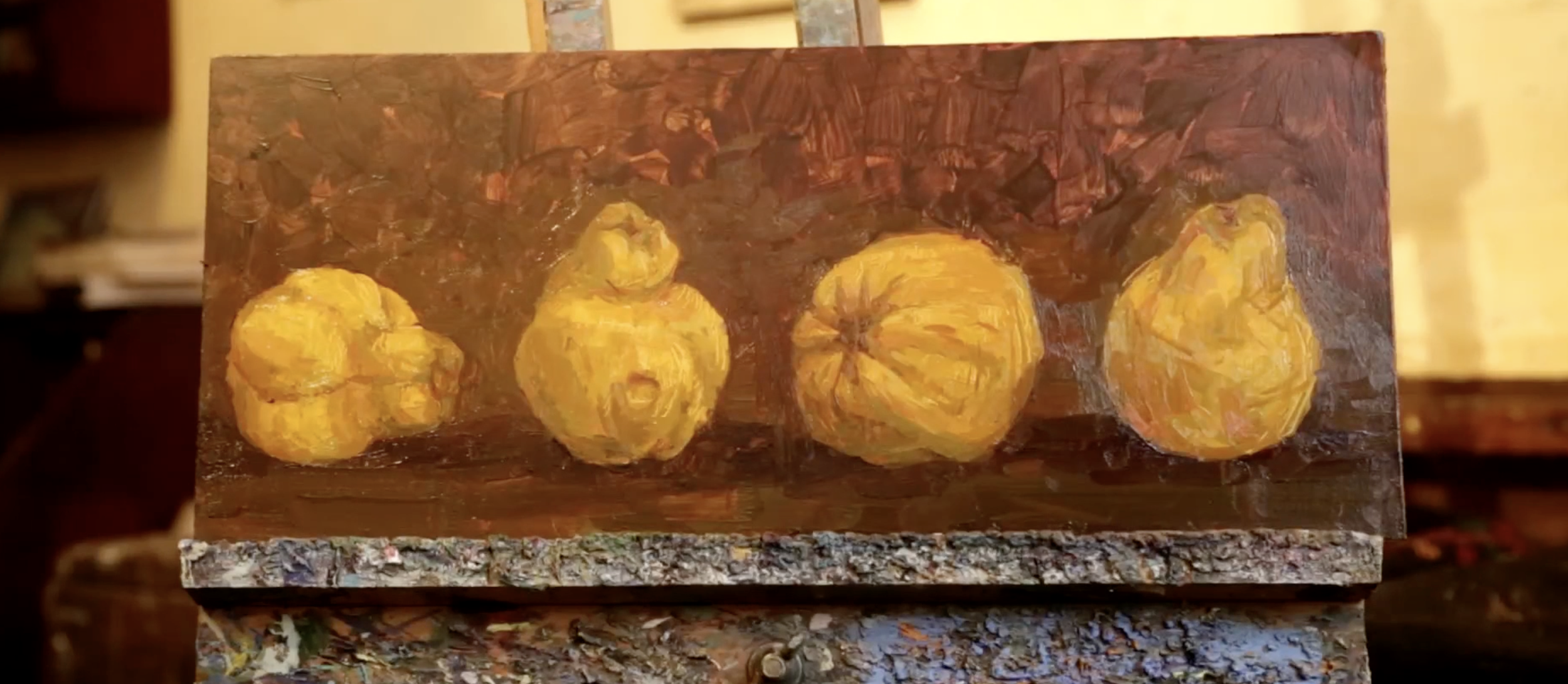
Francis Hamel, ‘the beginning of a painting.’
Eduardo Chillida, How profound is the air, 1996